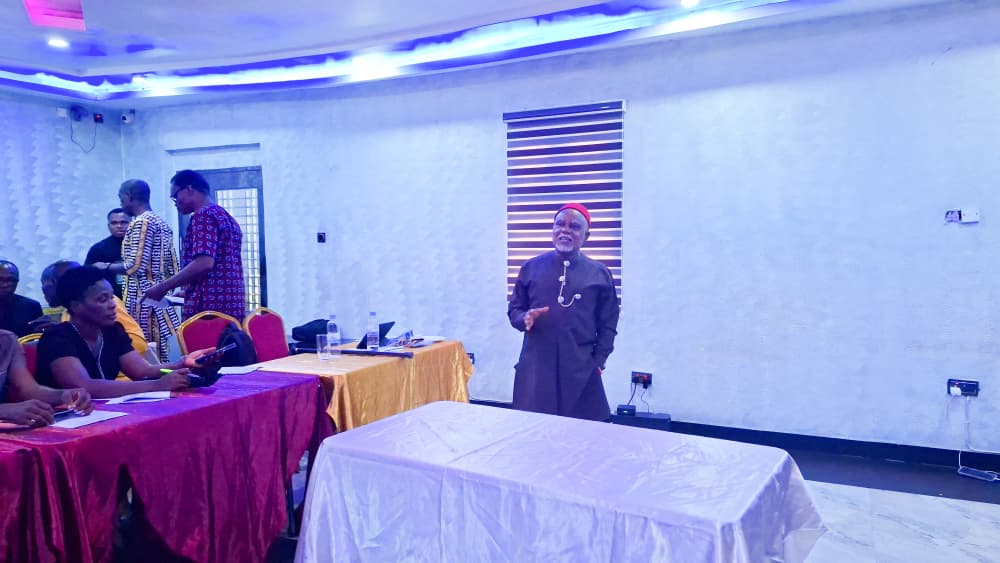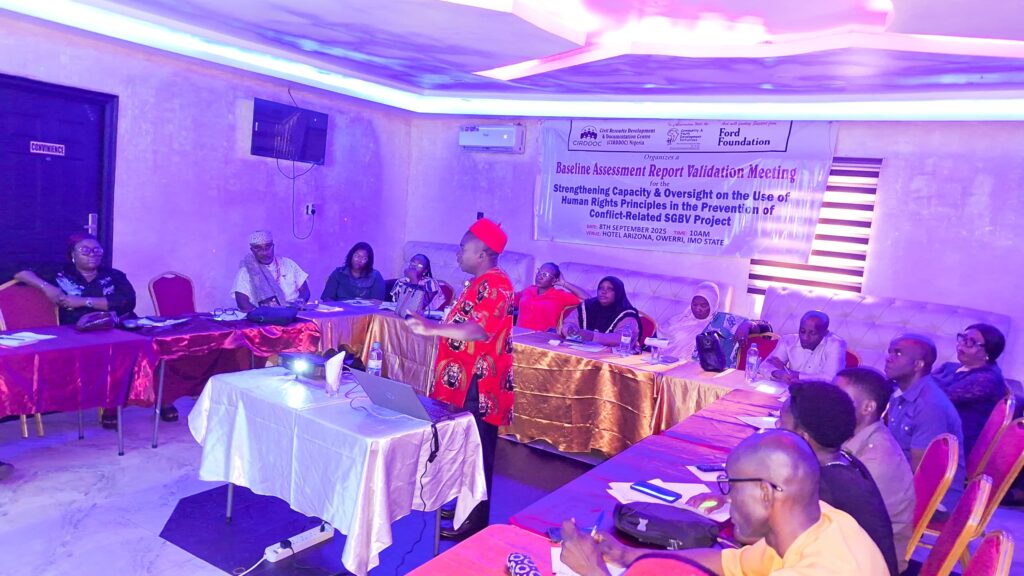
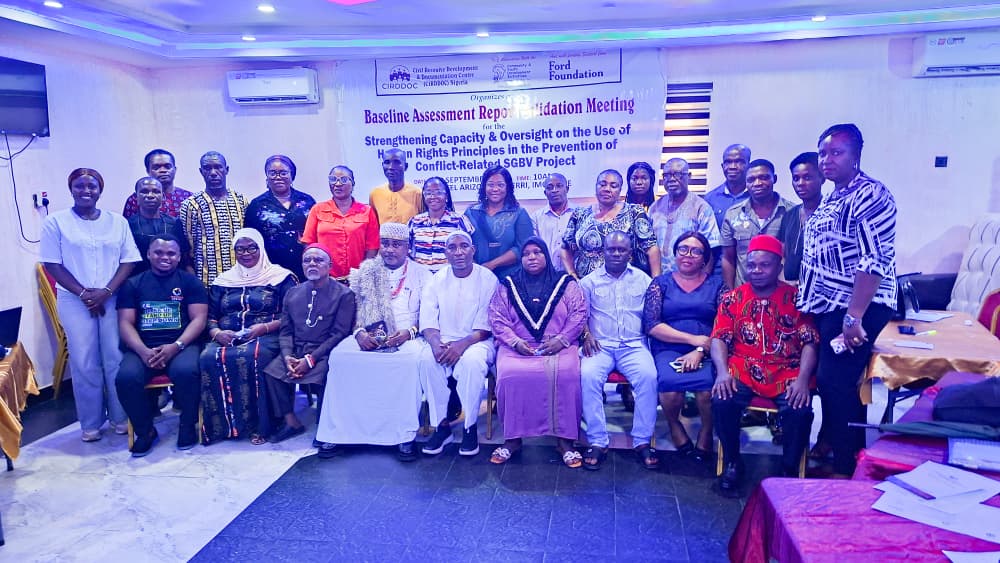

Community & Youth Development Initiatives (CYDI), in partnership with the Civil Resource Documentation and Development Centre (CIRDDOC) and with support from the Ford Foundation, recently hosted a Baseline Research Validation Meeting on the prevention of conflict-related Sexual and Gender-Based Violence (SGBV) in Imo State. Held on September 8, 2025, at Hotel Arizona, New Owerri, the one-day session brought together government officials, civil society actors, media practitioners, community leaders, and key Ministries, Departments and Agencies. The meeting aimed to validate findings from a baseline research conducted in three conflict-affected communities—Umuokanne (Ohaji-Egbema LGA), Orogwe (Owerri West LGA), and Okigwe Urban (Okigwe LGA)—and to co-create grassroots-led solutions grounded in human rights principles.
At the validation meeting, Pascal Anozie from CIRDDOC Nigeria, who is the Project Manager of the Project, explained that the exercise was critical for grounding interventions in evidence. “We invited stakeholders to review and validate the findings so that at the end of implementation, we can measure impact. Every input here will be reflected in the report. Research like this gives CSOs, government agencies, and the media a base for planning and action,” he said. Felxfame Enisire, Executive Director of CYDI and State Programme Officer for the project, emphasized that one of the major challenges faced by Civil Society Organizations (CSOs) in addressing SGBV in Imo State is the absence of harmonized and reliable data to guide interventions. He noted that the state lacks a centralized data bank for warehousing SGBV-related cases, a gap that significantly undermines evidence-based policy decisions and programming. As a result, CSOs are often compelled to conduct fresh baselines before implementing any SGBV-focused project, while others rely on generalized national surveys—such as the Multiple Indicator Cluster Survey (MICS) and the Nigeria Demographic and Health Survey (NDHS)—which do not capture the unique realities of all LGAs in Imo. The research, led by consultant David Onyinyechi Agu, specifically assessed conflict-related SGBV trends in Imo and Benue States to document realities on the ground and generate actionable recommendations for government, traditional leaders, CSOs, and the media. Stakeholders at the meeting validated the consultant’s findings, confirming that they were in line with the lived realities in Imo State.
Discussions during the meeting highlighted the urgent need for reliable data, stronger awareness of the Violence Against Persons Prohibition (VAPP) Law, and the importance of community-driven strategies to protect vulnerable populations. Stakeholders agreed to intensify public sensitization, translate protective laws into local languages, and improve investigative journalism to ensure accurate reporting on SGBV and conflict issues. Commitments were also made to strengthen data collection and management systems for evidence-based planning, while community leaders pledged to take greater responsibility for local security by leveraging trusted community members. The session reinforced key lessons: early engagement of investigative media fosters credible advocacy; grassroots ownership is vital for sustainable interventions; and high-level participation from MDAs and influential leaders helps ensure that recommendations are both practical and authoritative. CYDI remains dedicated to strengthening human rights approaches and fostering community-led action to end conflict-related SGBV across Imo State.